
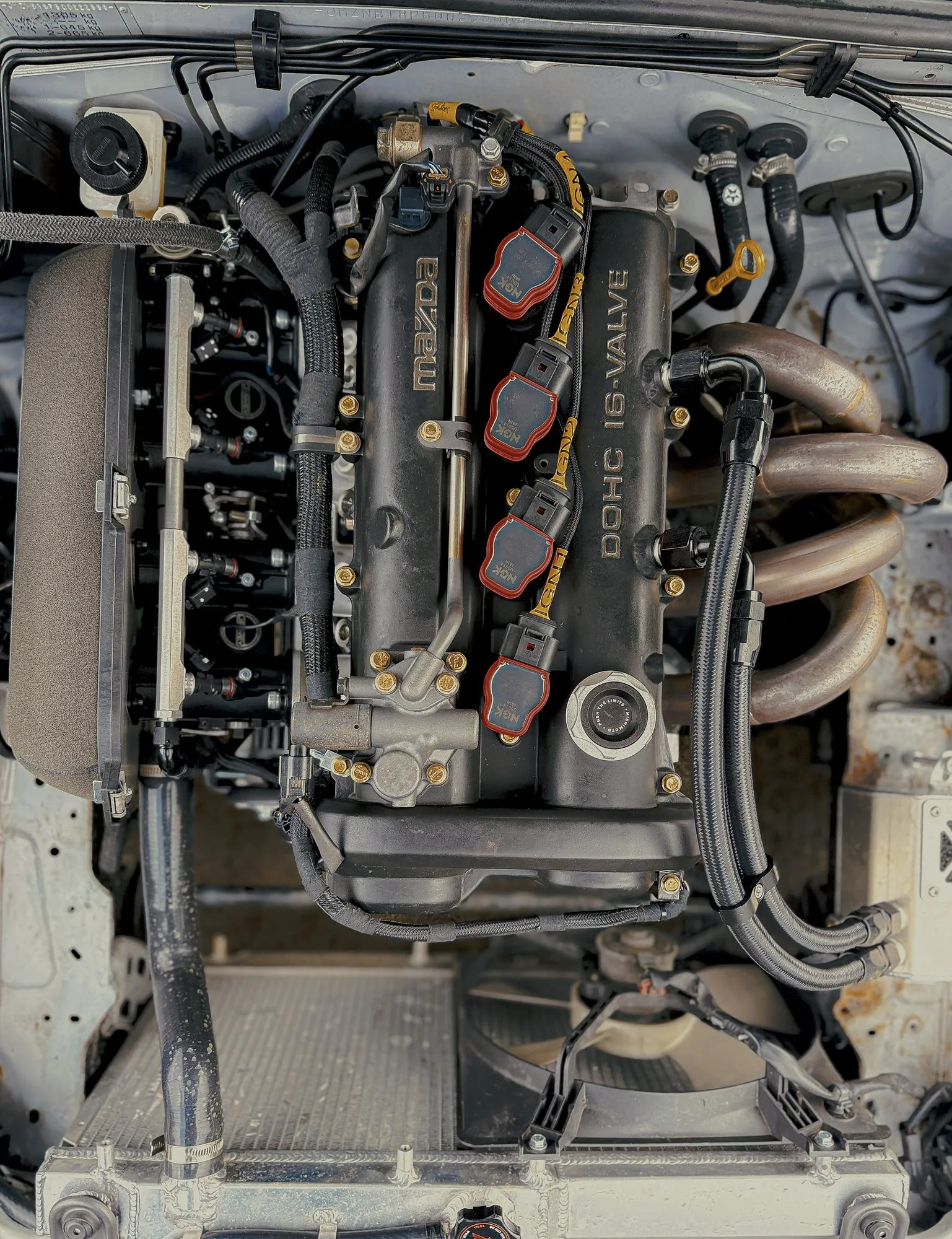
This is the rocker cover we fit to turbocharged and supercharged MX-5s running a catch can, and to naturally aspirated cars that are built to see a lot of abuse. The photos below show covers from across the MX-5 range going through the process in the workshop, and the one above is a finished cover fitted, plumbed and working for its living. The same cover is available from us as an exchange unit, and this note is the how and the why of what goes into one.
Why the standard cover struggles on boost
Every engine pushes some combustion gas past the rings into the crankcase, and that blow-by has to go somewhere. On a standard MX-5 the cover handles it with a PCV valve on the intake side, pulled by manifold vacuum, plus a small breather takeoff. That system is designed around a naturally aspirated engine, and it works fine there.
Add boost and the picture changes. A PCV valve that sees boost instead of vacuum is no longer doing the job it was designed for, and the volume of blow-by rises with cylinder pressure. The usual answer is a catch can plumbed to the cover, and at mild boost the standard takeoffs cope. Push further, and especially on track, and the pattern is well known on boosted MX-5s: the stock ports are too small for the volume, pulling from the intake side drives oil out of the engine with the air, and the catch can fills with oil far faster than it should.
It is not only a boost problem either. On a standard system the engine breathes its own oil vapour back into the intake, and oil in the charge lowers its knock resistance, it is simply a lower octane mixture once oil mist is in it, as well as coating the intake tract as it goes. On a naturally aspirated engine that lives at high rpm on track, closing that loop matters for the same reasons: crankcase pressure, oil consumption, and keeping the intake charge clean so the engine can run the timing it should.
So rather than hanging more plumbing off ports that were never sized for the job, we modify the cover itself.
Close the old routes, drill the new ones
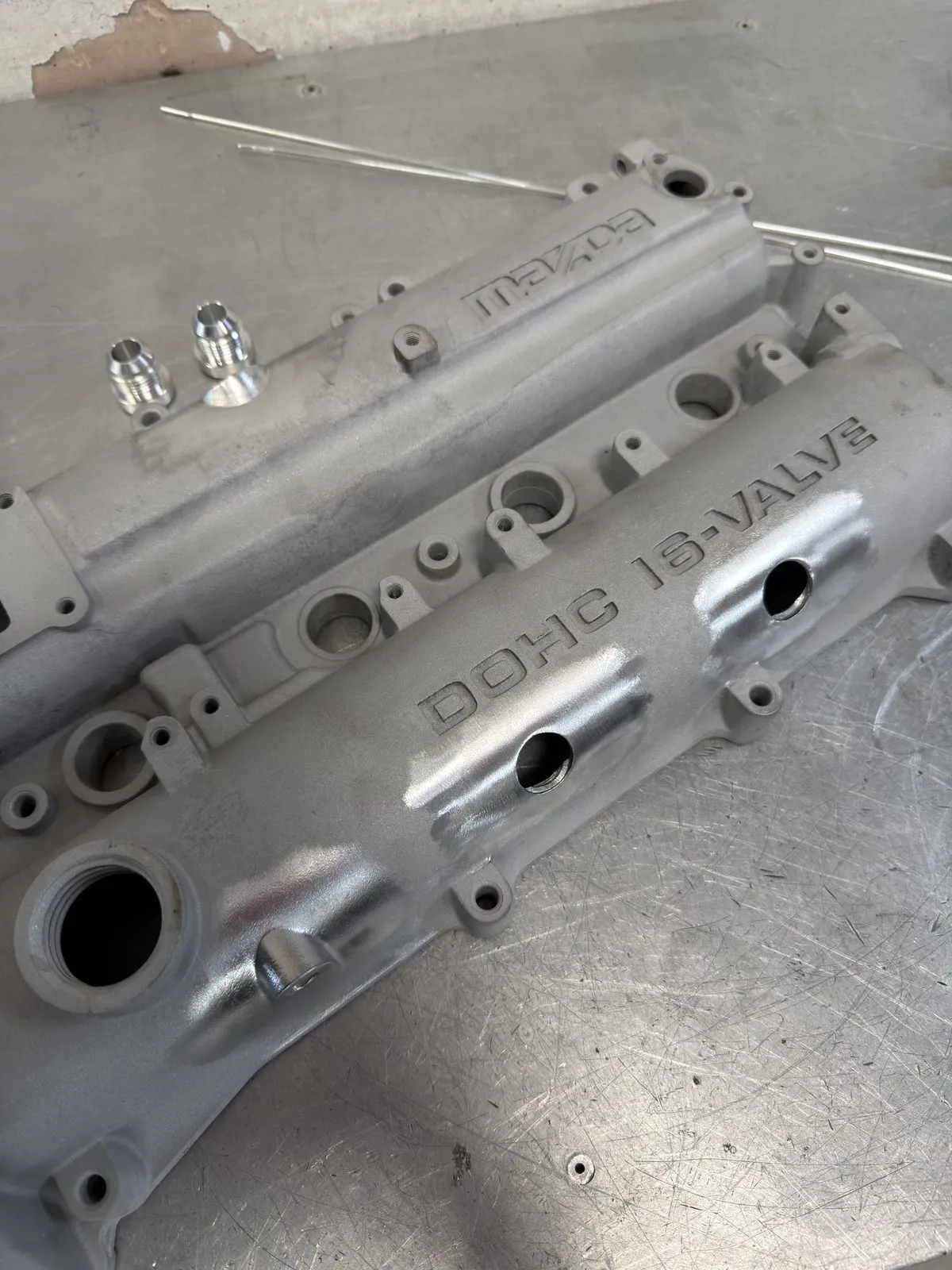
First the factory routes are closed off. The OEM PCV valve is blanked, welded up both internally and outside, and the other takeoff is blanked as well. Nothing breathes through the standard ports any more, which means nothing can pull oil out through the intake side either. The new breather path is a pair of AN10 ports drilled through the top of the cover on the exhaust side. AN10 because the whole point is volume: two large ports where the factory had small ones, sized for the amount of blow-by a hard-driven engine actually makes.
Open up the baffles inside
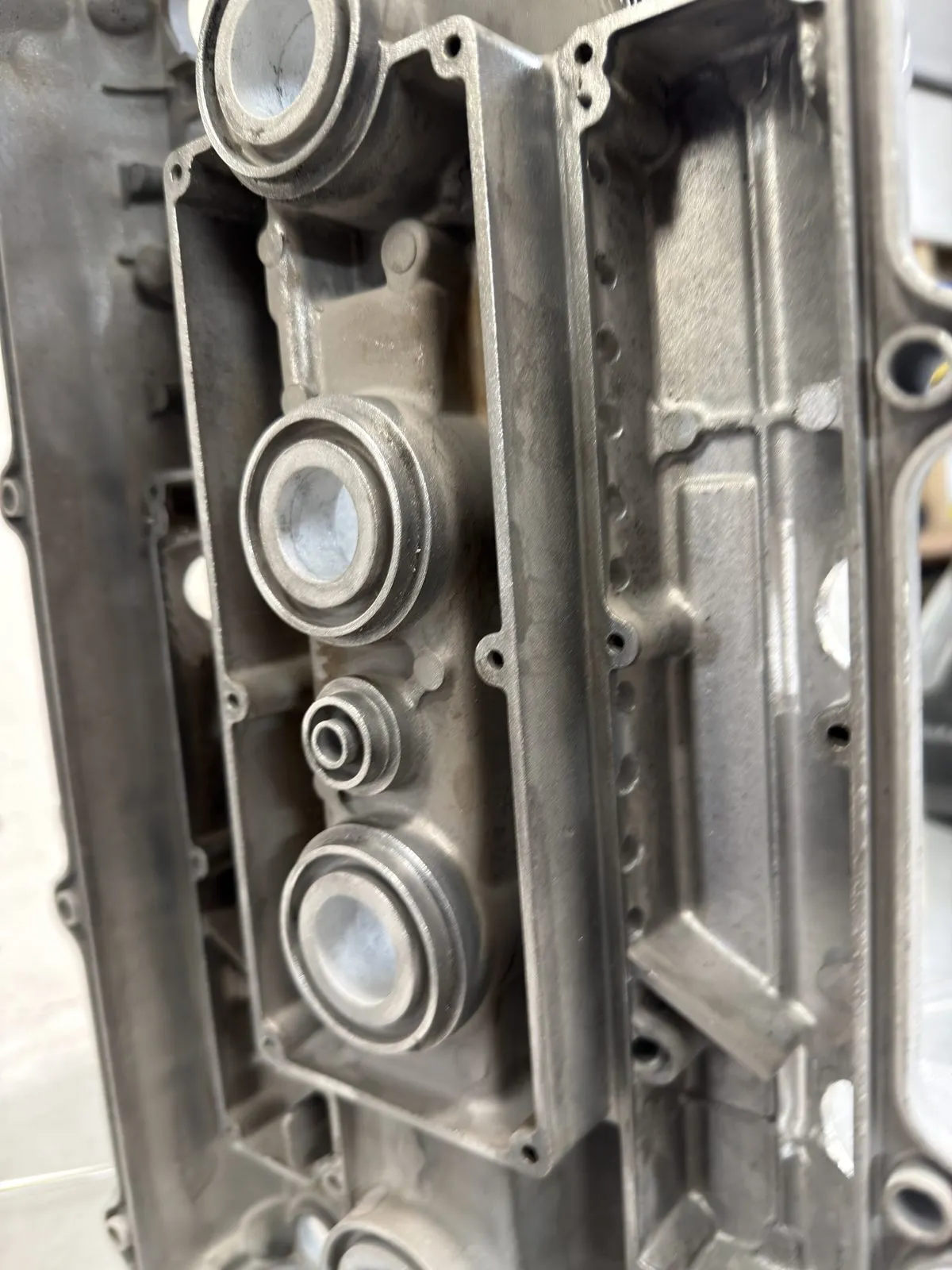
Under the cover there are baffle chambers: intake side, centre, and exhaust side. With the factory routes blanked, the intake side baffle no longer does anything, but its plate goes back on regardless. The work is in the centre and exhaust baffles. We drill a row of holes through them to raise the volume of air that can pass from the centre of the cover through to the exhaust side, so the two AN10s can actually breathe at full capacity rather than being throttled by the casting. The details differ from cover to cover, the covers changed through the MX-5's life, but the principle is the same on all of them.
Welded, not bolted
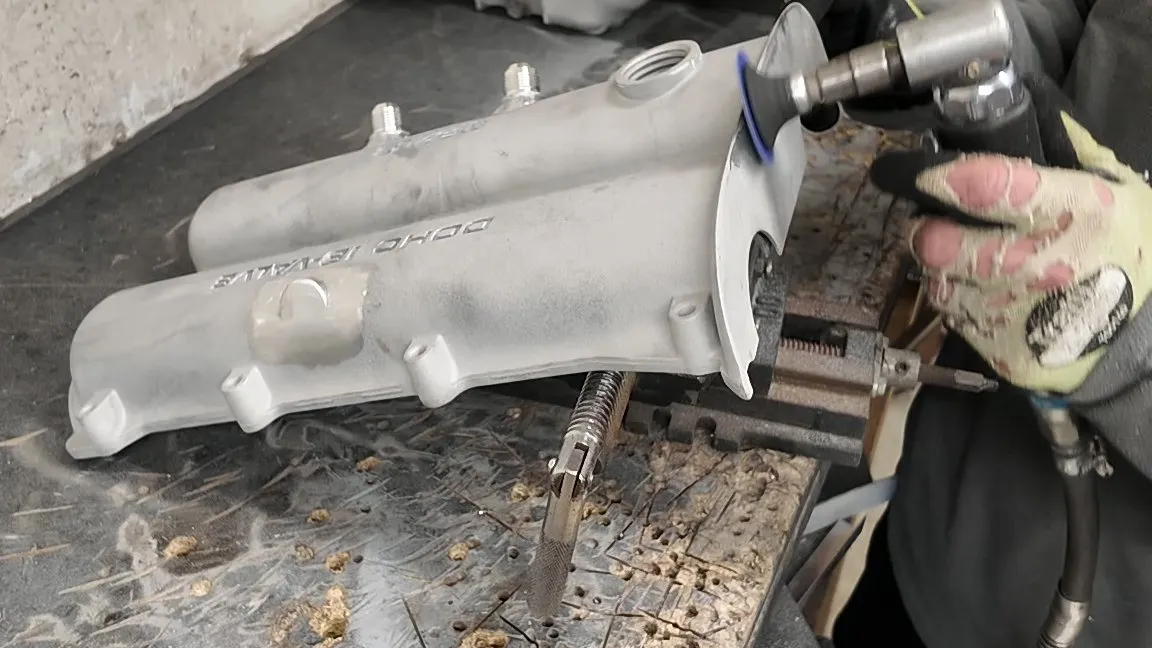
The bungs go on under the TIG torch, welded at a 45 degree angle rather than straight up. That is a deliberate FOJI detail: fittings pointing straight at the sky put the hose ends right against the bonnet on these cars, and angling them buys back the clearance and gives the lines a natural run toward the catch can. The blanks get the same treatment, welded closed inside and out rather than plugged.
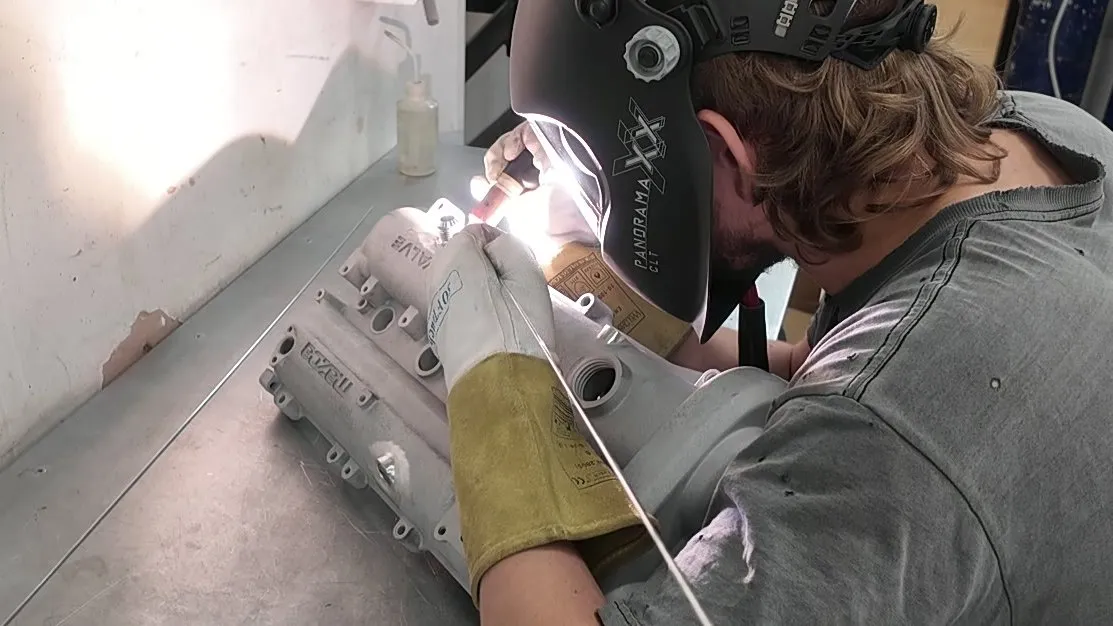
Then the welds are dressed back so the finished cover looks like it left the factory this way.
Steel wool does the separating
Air leaving the engine at that rate carries oil mist with it, and the catch can should be the last line of defence, not the first. So the baffle chambers get lightly packed with stainless steel wool. It is not stuffed tight, the packing is there to put some resistance in the flow. The air works through it, the oil hits the strands and drops out, and the separated oil simply drains back through the centre baffle into the engine where it belongs.
Sealed up and painted
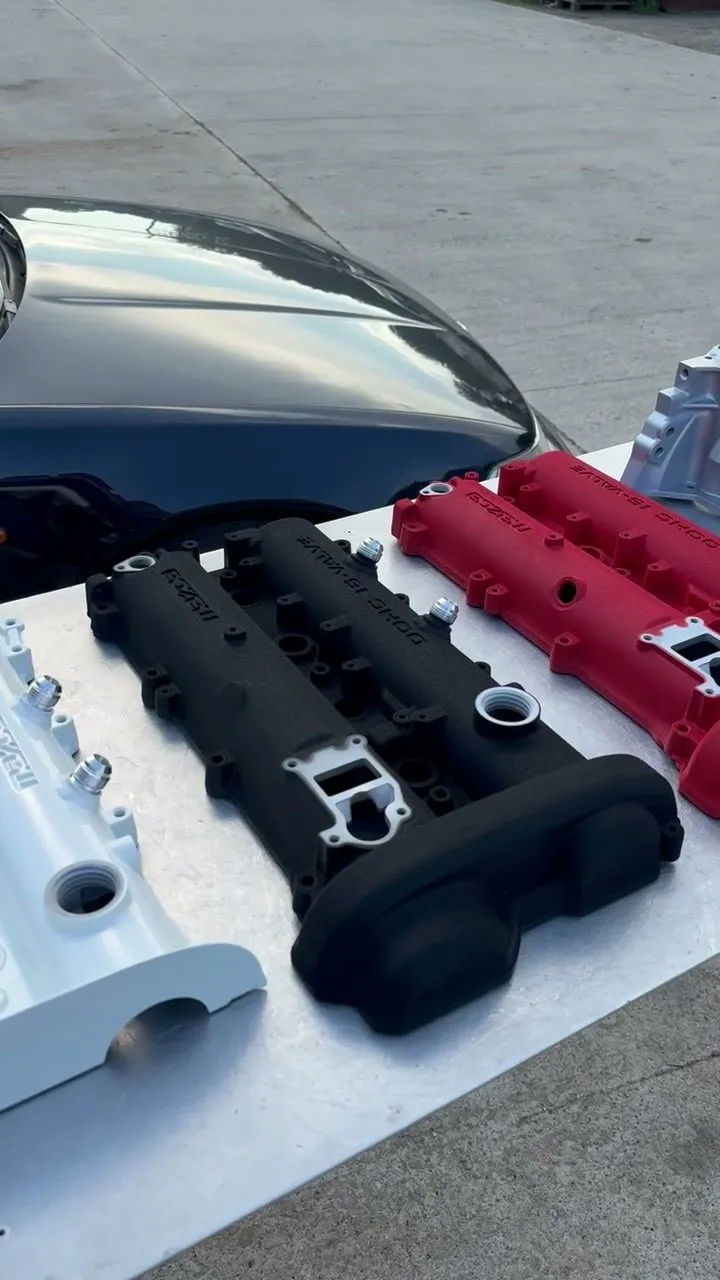
The baffle plates are sealed back on and the cover is finished in paint, with a few colours to pick from. From the outside you see two angled fittings and fresh paint. All the work that matters is underneath.
On the car
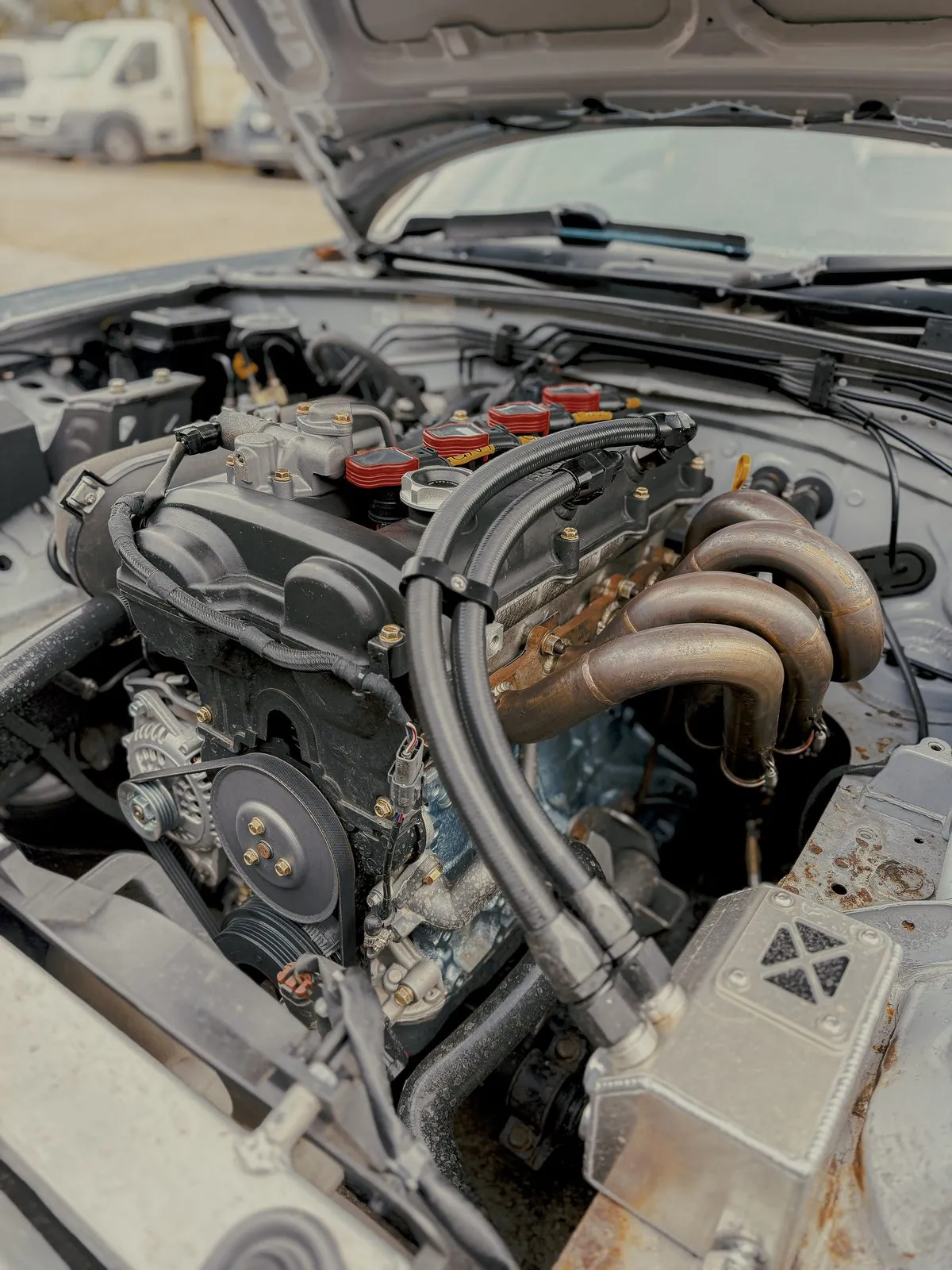
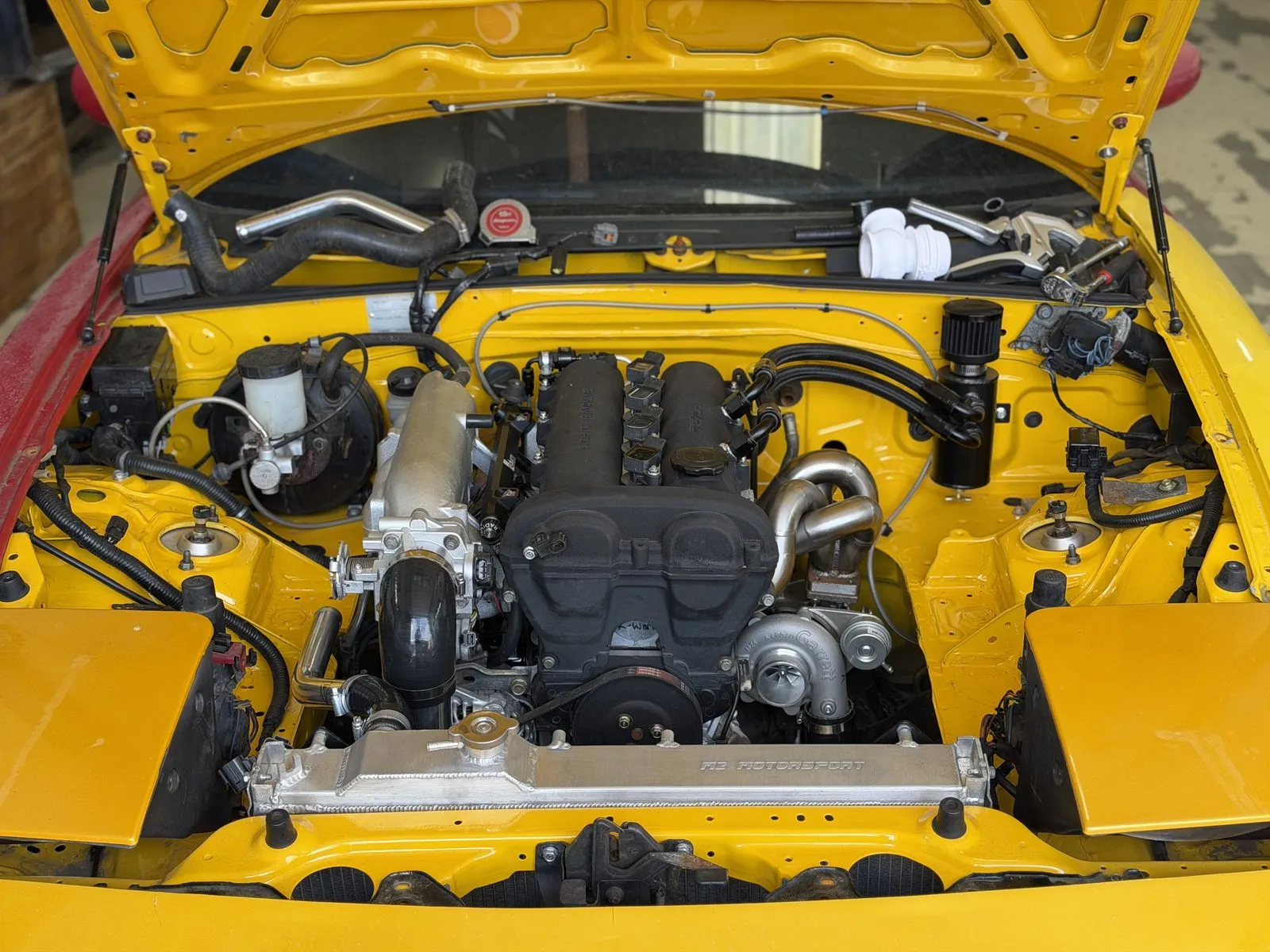
The two AN10 lines run to the catch can, and that is the engine's whole breather system: high volume, from the right side of the cover, with the oil separation happening inside the cover before the air ever leaves it. The result on a boosted car is a catch can that catches what it is meant to instead of filling with engine oil, and a crankcase that can breathe at the rate the engine actually produces.
Out on customer cars
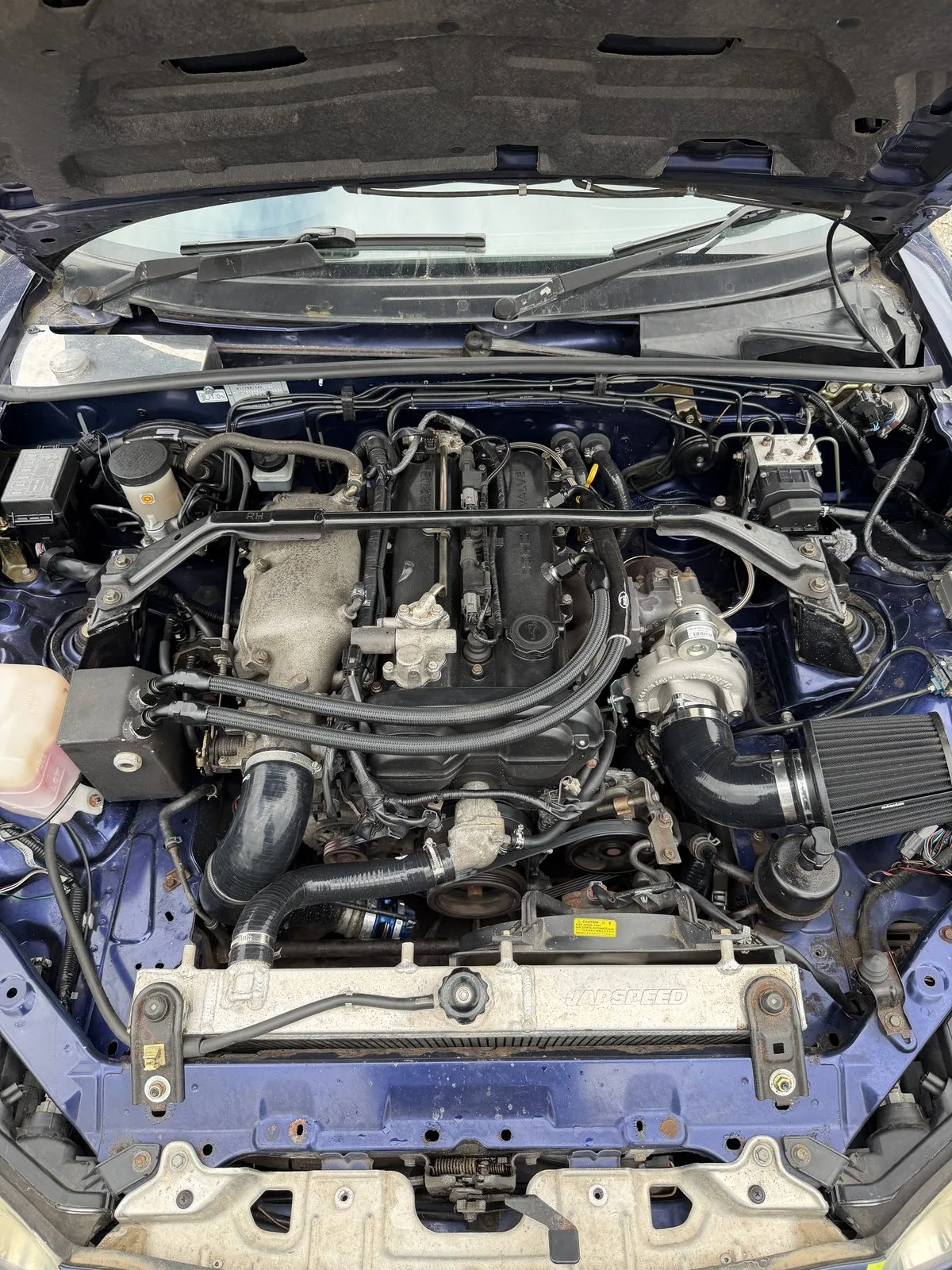
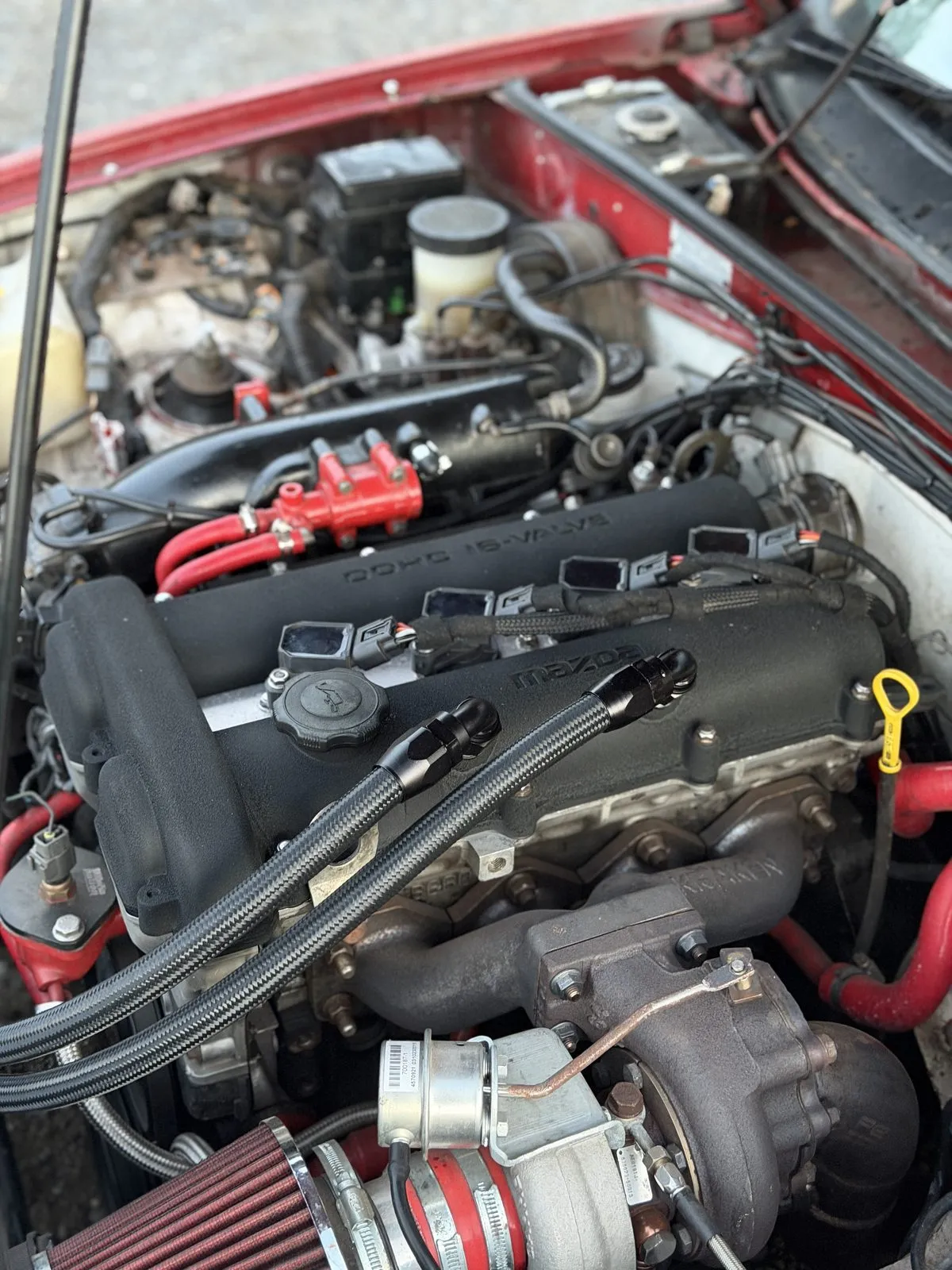
Buying one
We sell these on an exchange basis, £350 for any MX-5 cover. You get a finished, painted cover built as above, and your original comes back to us to become the next one. If you would rather do your own paint, an unpainted cover is £280. To order one, get in touch and tell us which cover you are running. If you are not sure what your setup needs, ask, that is what we are here for.