
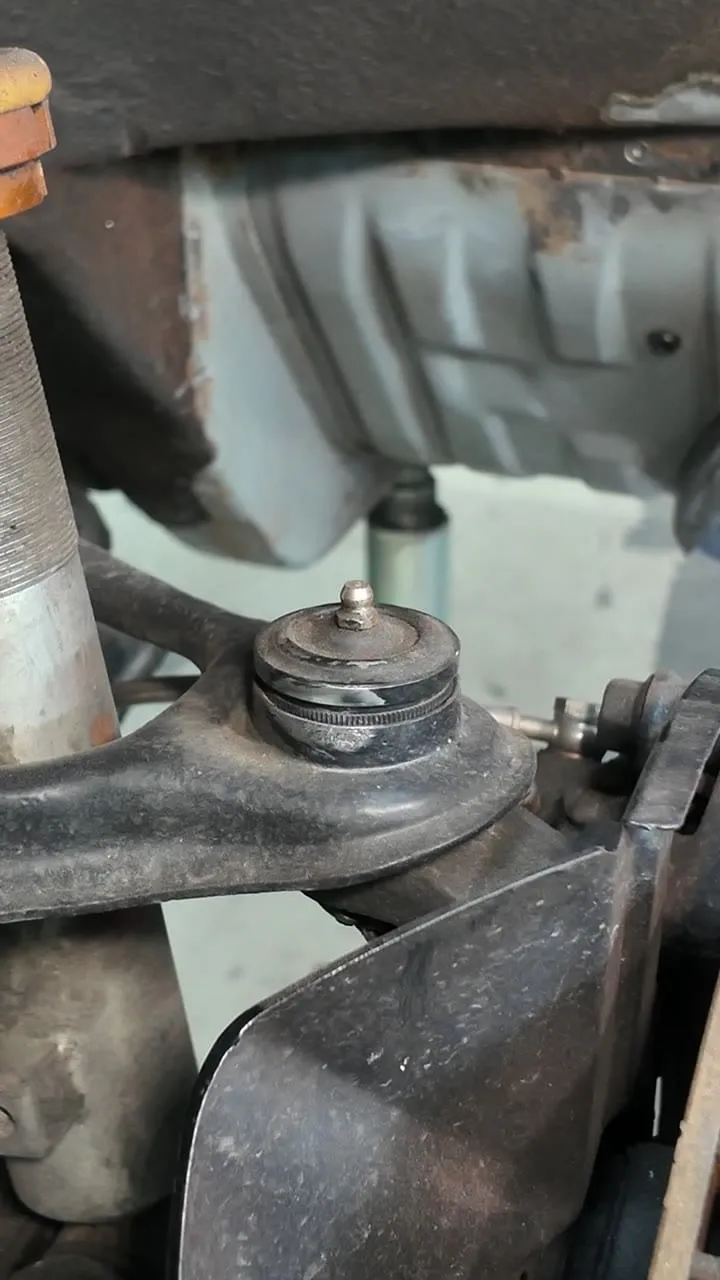
This one is a safety tip, not a nicety. The front upper ball joint on an MX-5 can work its way out of the arm, and if it lets go the suspension comes apart. It is easy to cause without realising, and just as easy to prevent. Here is what happens and how we make sure it never does.
What goes wrong
The front upper ball joint is pressed into the upper arm and held by splines that bite into the bore of the arm. That is fine from the factory. The trouble starts when the joint is replaced, which it often is, because the boot splits and the joint fails an MOT.
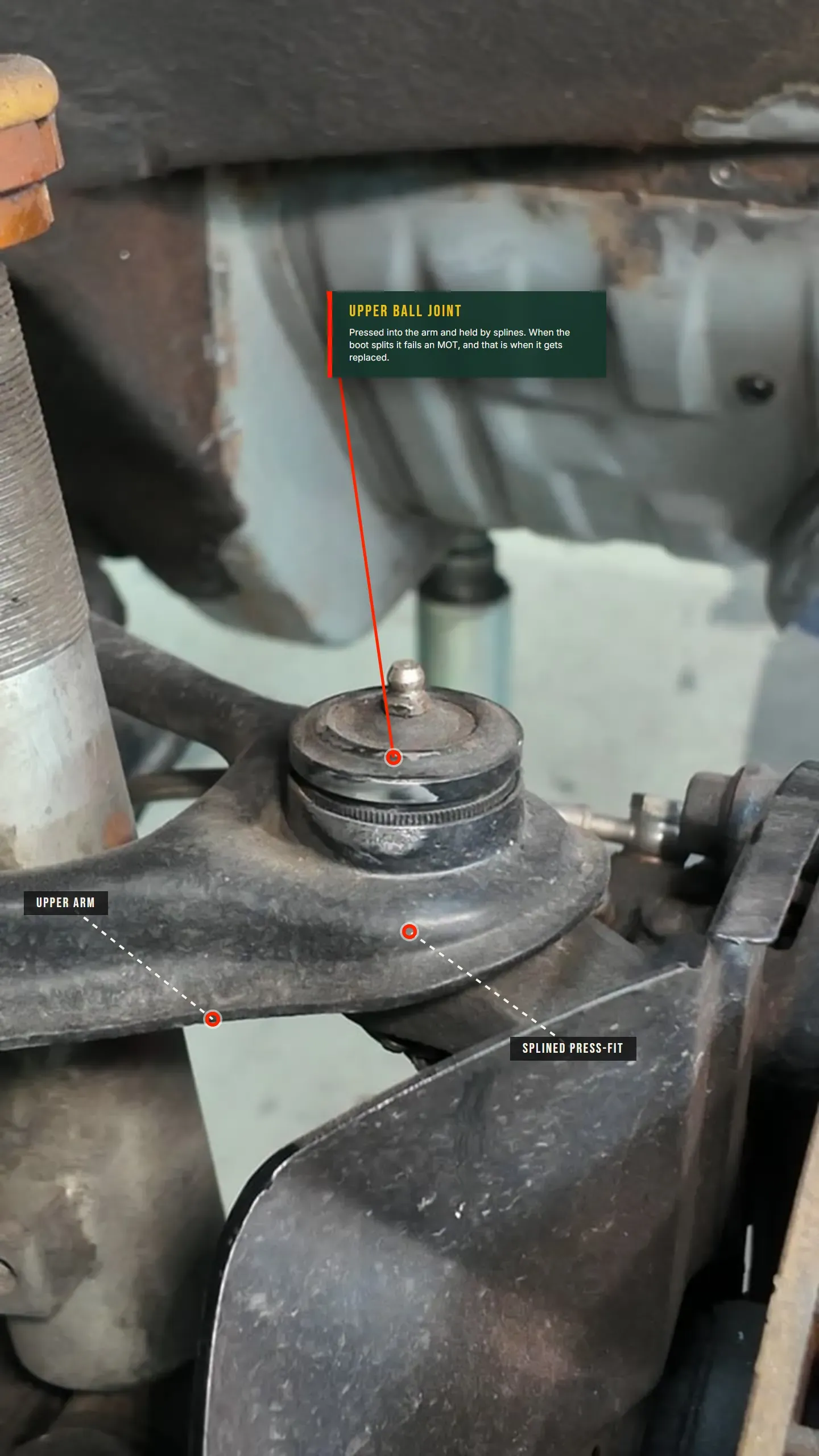
When the old joint is pressed out, it drags on those splines and wears them. So when a new joint is pressed in, it goes in far more easily than the original did, which means it can also work back out far more easily. Some aftermarket replacement joints come with a circlip to stop them pushing out once they are in, but even with the circlip the joint can still work loose by a couple of millimetres before the circlip catches it, and movement in a top ball joint is exactly what you do not want. That is how an arm that was "repaired" ends up failing.
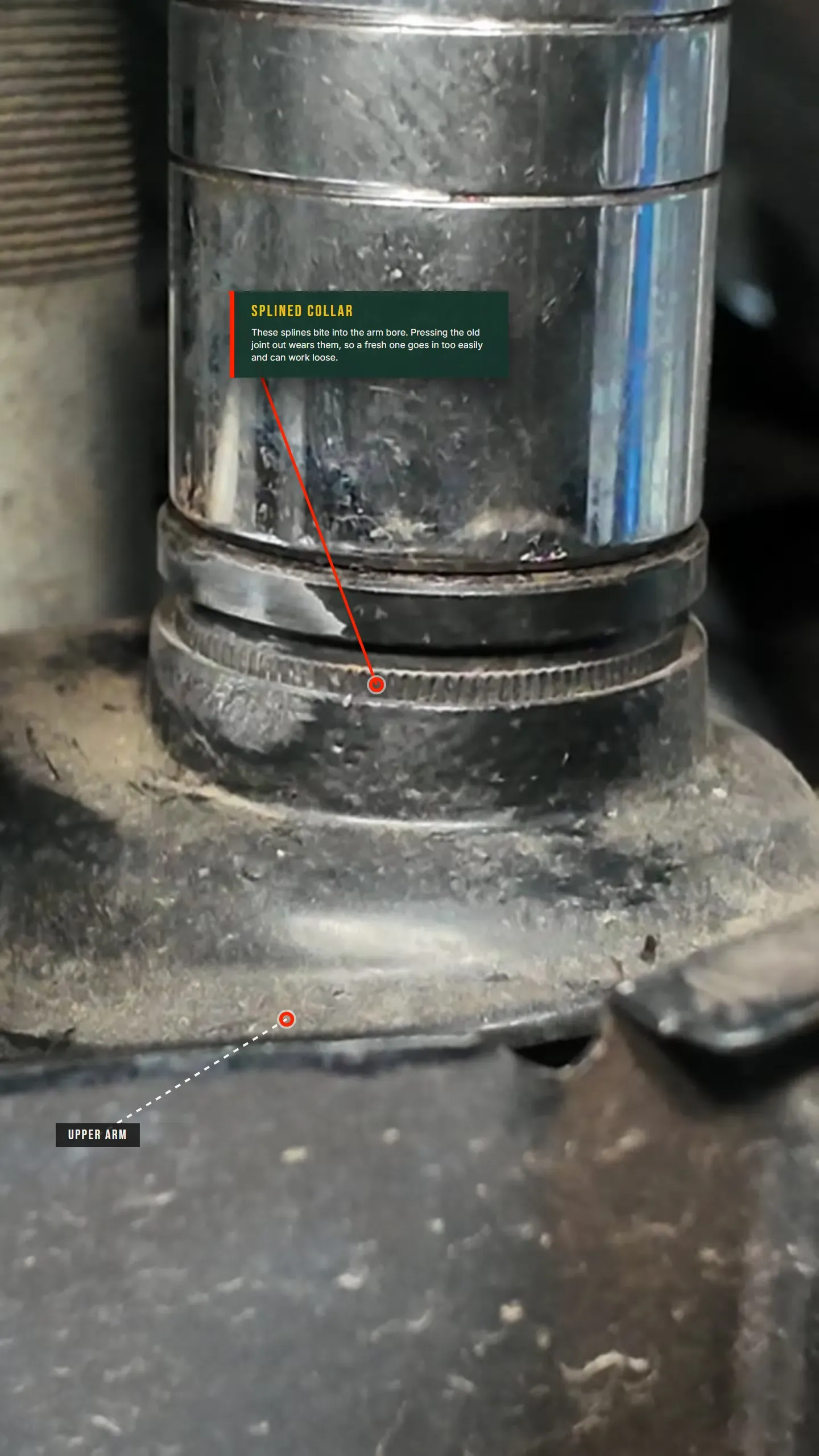
One thing to get right before any of this: although the upper arms themselves are the same across Mk1, Mk2 and Mk2.5, the ball joints are not interchangeable. The part of the knuckle the joint passes through is thinner on a Mk1, around 10mm, against roughly 14mm on a Mk2 and Mk2.5, so the ball joint shank is shorter on a Mk1 and longer on the later cars. Fit the one that matches the car. The other variable is ABS: a Mk1 is usually non-ABS but not always, a Mk2 is usually ABS but not always, and every Mk2.5 is ABS.
How we stop it for good
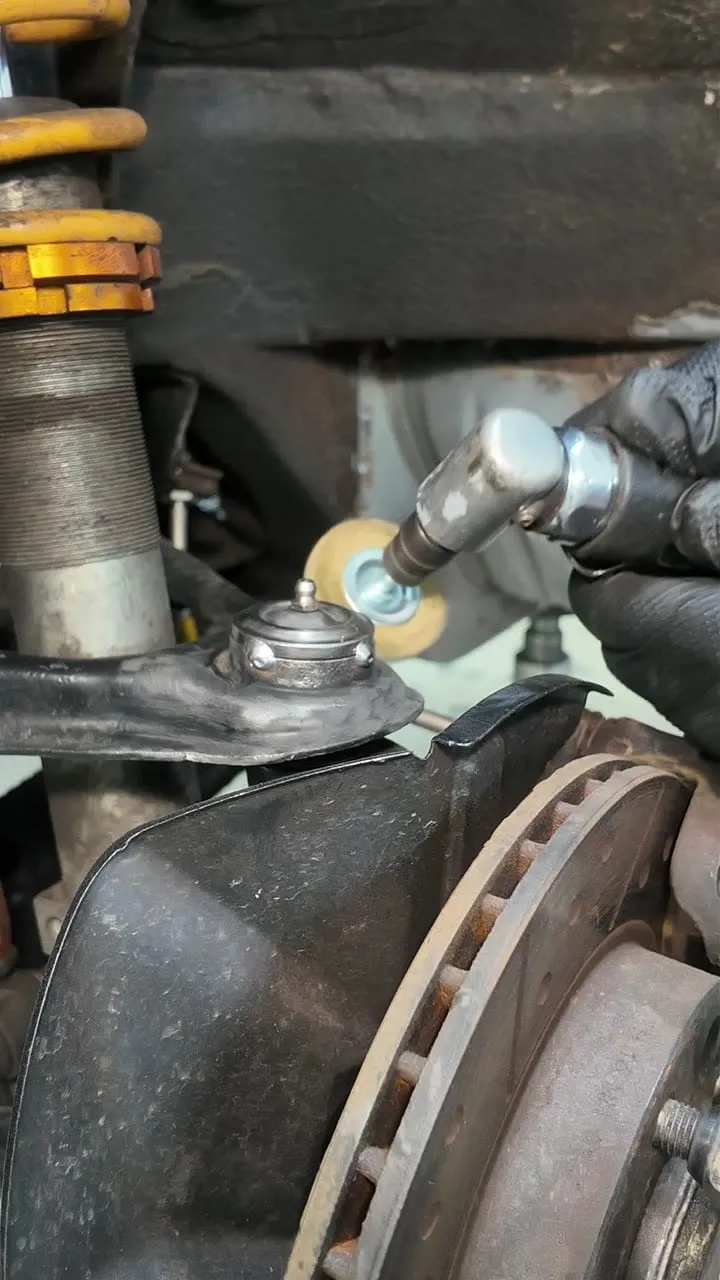
Once the new ball joint is pressed back into a cleaned-up arm, we run two small MIG tack welds, one either side, that lock it in place and stop it backing out. We do this even on a joint that came with a circlip, because a circlip still lets it move those couple of millimetres and a tack means it cannot move at all. That is it. The joint cannot migrate, and the arm is safe.
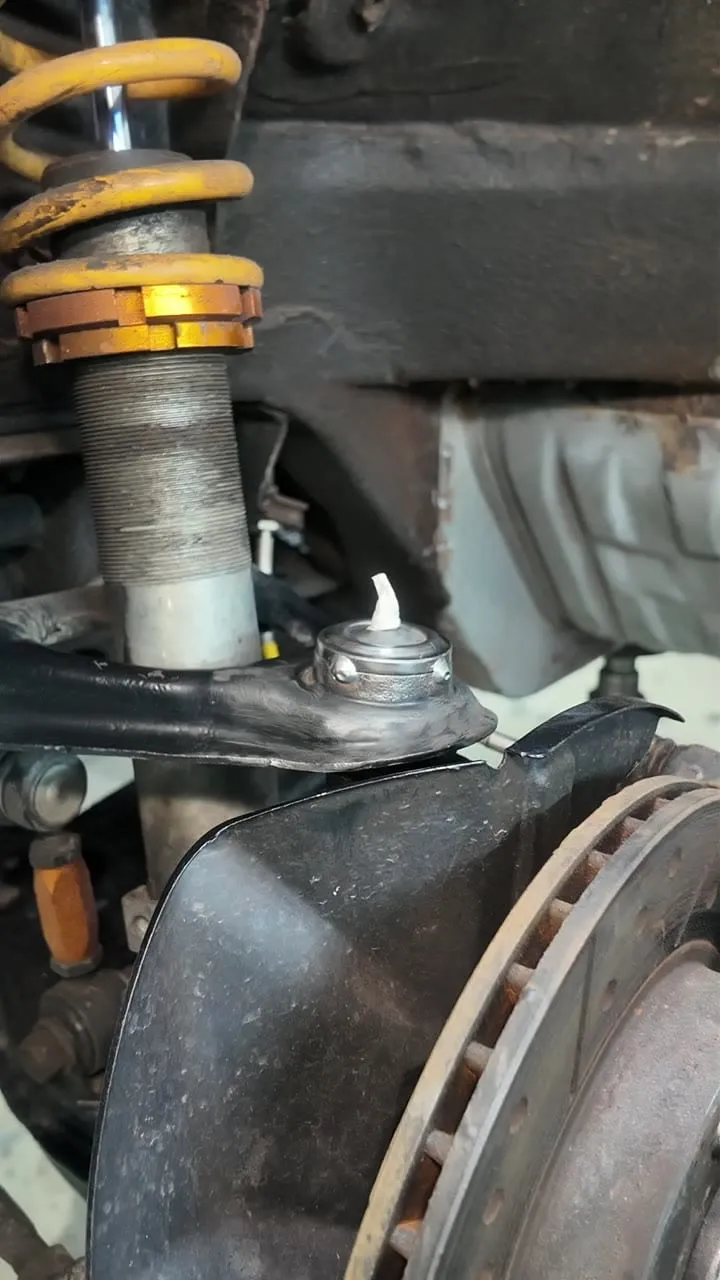
It is deliberately a small, controlled weld for two reasons. First, the ball joint is a big lump of metal and acts as a heat sink, so we keep an airline on it to pull the heat away and protect the joint and its boot while we tack it. Second, it stays serviceable: when the joint eventually needs replacing again, you simply slit those two tacks and press it out as normal. You get the security of a welded joint without losing the ability to service it.
The honest bit
You will not find this step in a parts catalogue, because nobody selling you a ball joint is going to weld it in for you. It is the difference between fitting a part and finishing a job properly. When we refurbish arms, every pressed ball joint gets the same two tacks, every time.