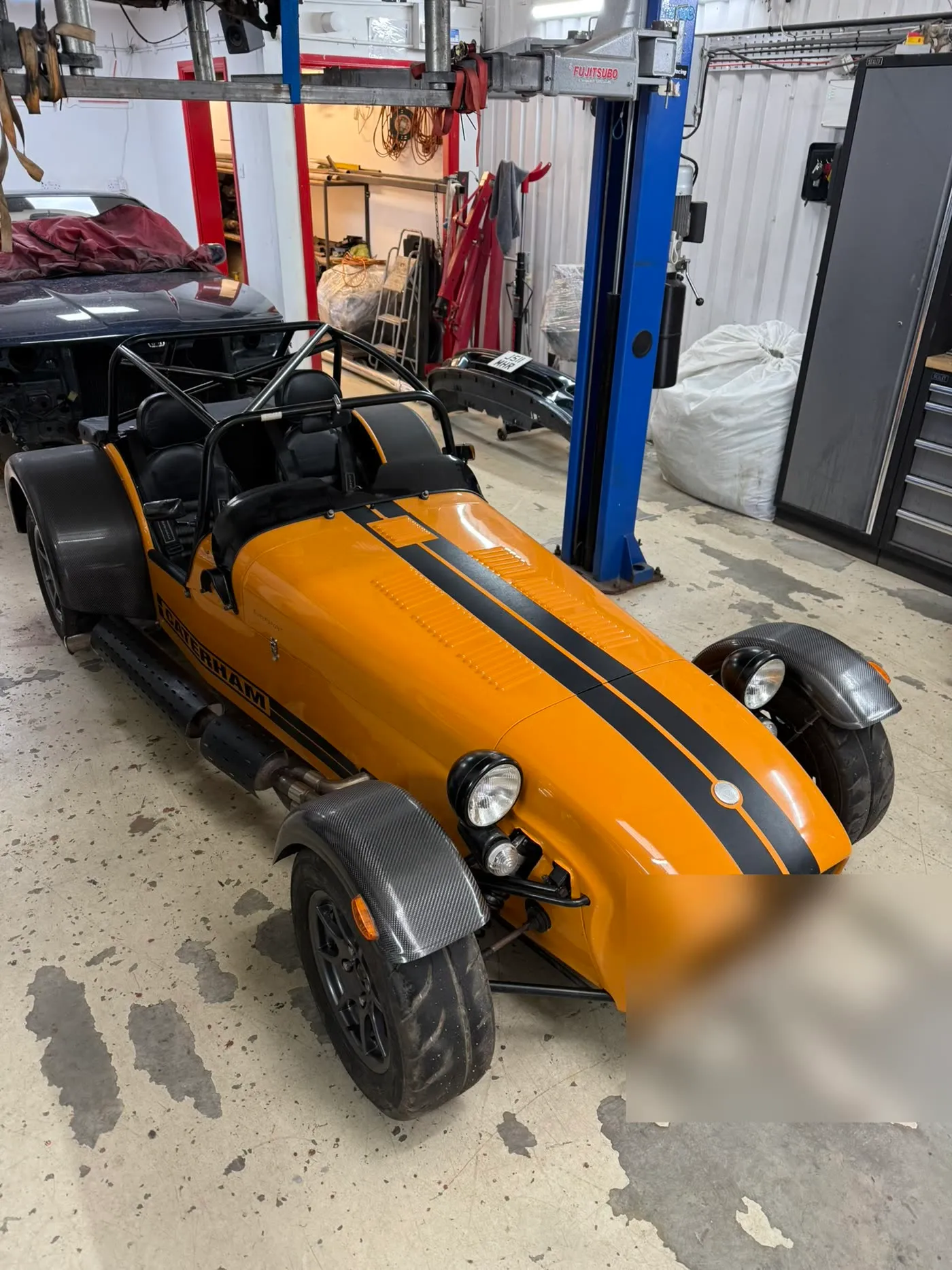
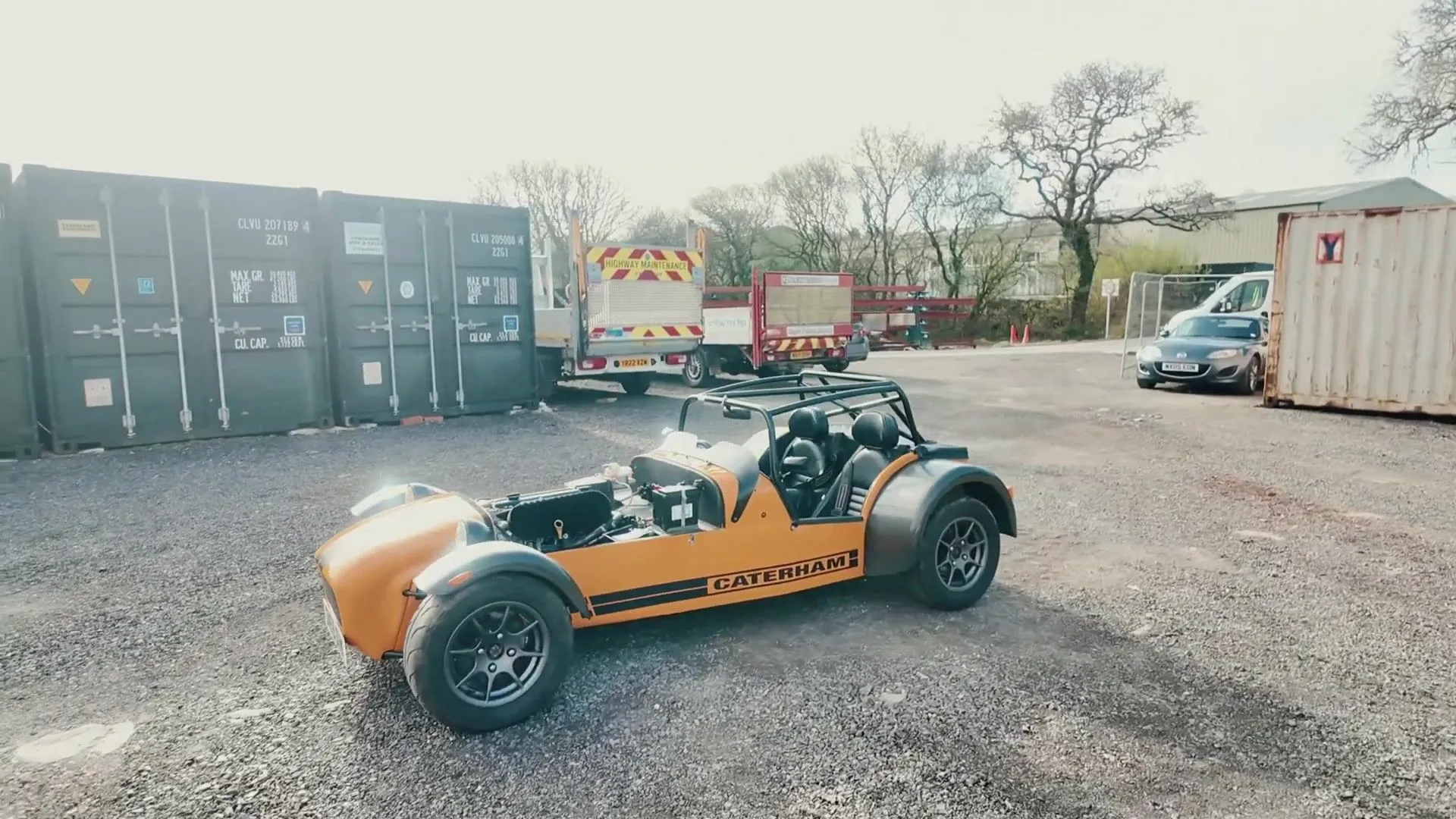
A Caterham Seven is a brilliant, simple, focused car. That same simplicity means there is nowhere for a problem to hide, and very little between a small electrical fault and a big one. This Sigma 150 came to us for a service and a throttle body setup. It left us safe. In between, a cooling fan that would not switch on led us to a burnt loom that was a genuine fire risk, and a missing part that should never have left the car. Here is the full story, in two videos and the work behind them.
Watch part one
What It Came In For
The owner brought the car to us after it had been sat for a while. He had been reconditioning a few parts and wanted it gone through properly before using it again. The brief was a service, a setup of the throttle bodies, a check over the ECU and the map to make sure everything was behaving, and a general health check. It was not running right, so the running was the place to start.
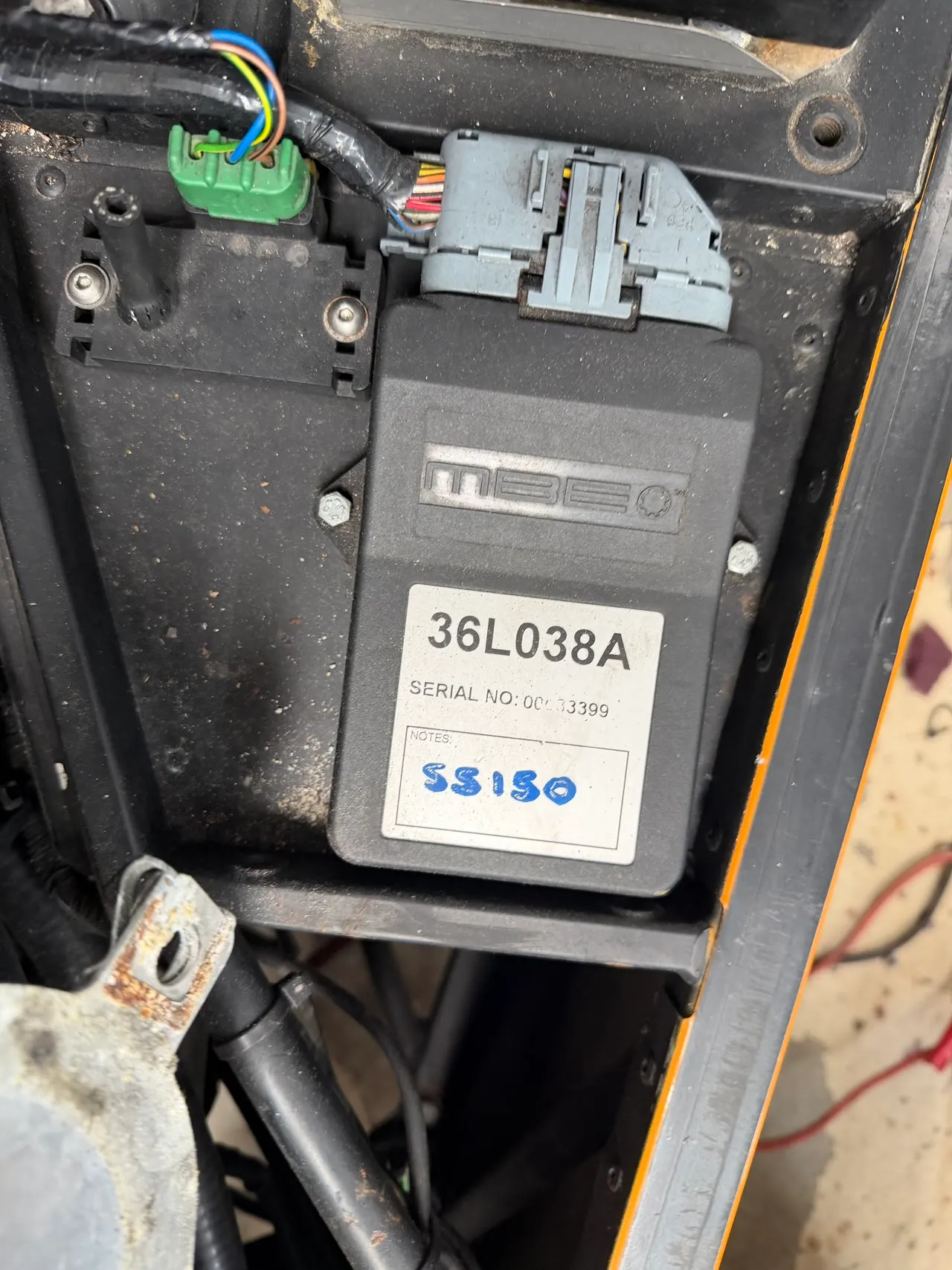
The Sigma 150 is the Ford 1.6 with individual throttle bodies, and the MBE ECU on these is locked down from new, so we cannot change the map. What we can do is plug in, read the live data, set the mechanical side up exactly to spec, and let the engine settle onto its targets. The numbers we were working to were a throttle position sensor reading of 1.04 volts, a clean base idle of 950 rpm, a full and even sweep from 1 to 5 volts across the throttle range, and both banks of bodies pulling the same air.
Getting It Running And The Bodies Balanced
It had been sat with stale fuel, so the first job was simply to get it to fire and idle. We got it lit, put a fresh battery and fresh higher octane fuel in, and brought it up to temperature so it was telling us the truth before we touched anything.
With it idling we checked the vacuum across both banks. Cylinders one and two are paired, three and four are paired, and you can trim a little between each pair. Bank one was pulling noticeably more air than the rear bank, which is common after a car has sat, the linkage and balance springs work loose. We balanced the banks to bring them together, targeting an even airflow across all four, and set the base idle to 950 rpm. The throttle position sensor was already close to its 1.04 volt target and we dialled it in, checking it swept cleanly through its full range. While we were under there we cleaned up the accessible earths and repaired a poor rear box ground, fitting it with proper washers so it could not work loose again.
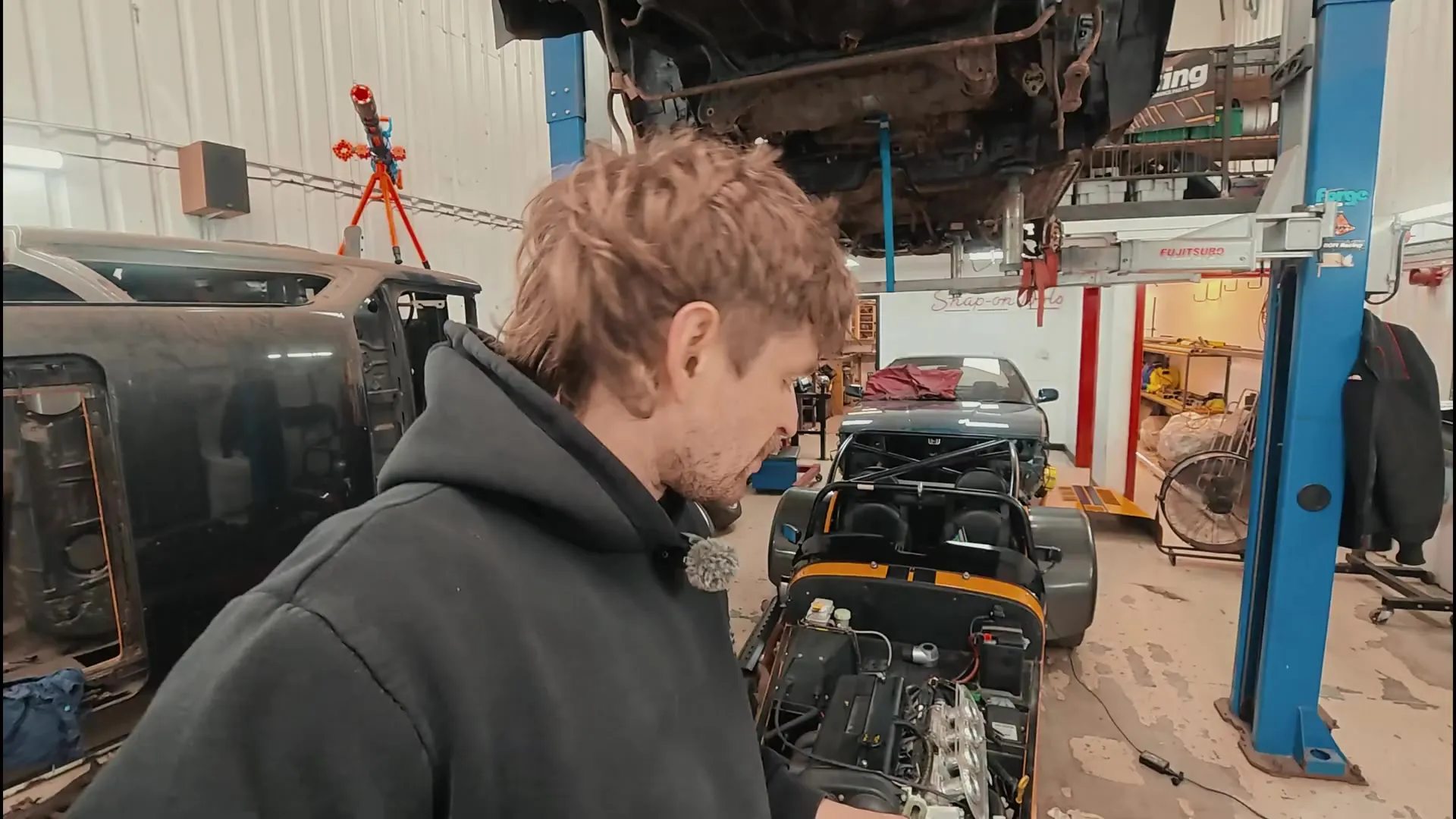
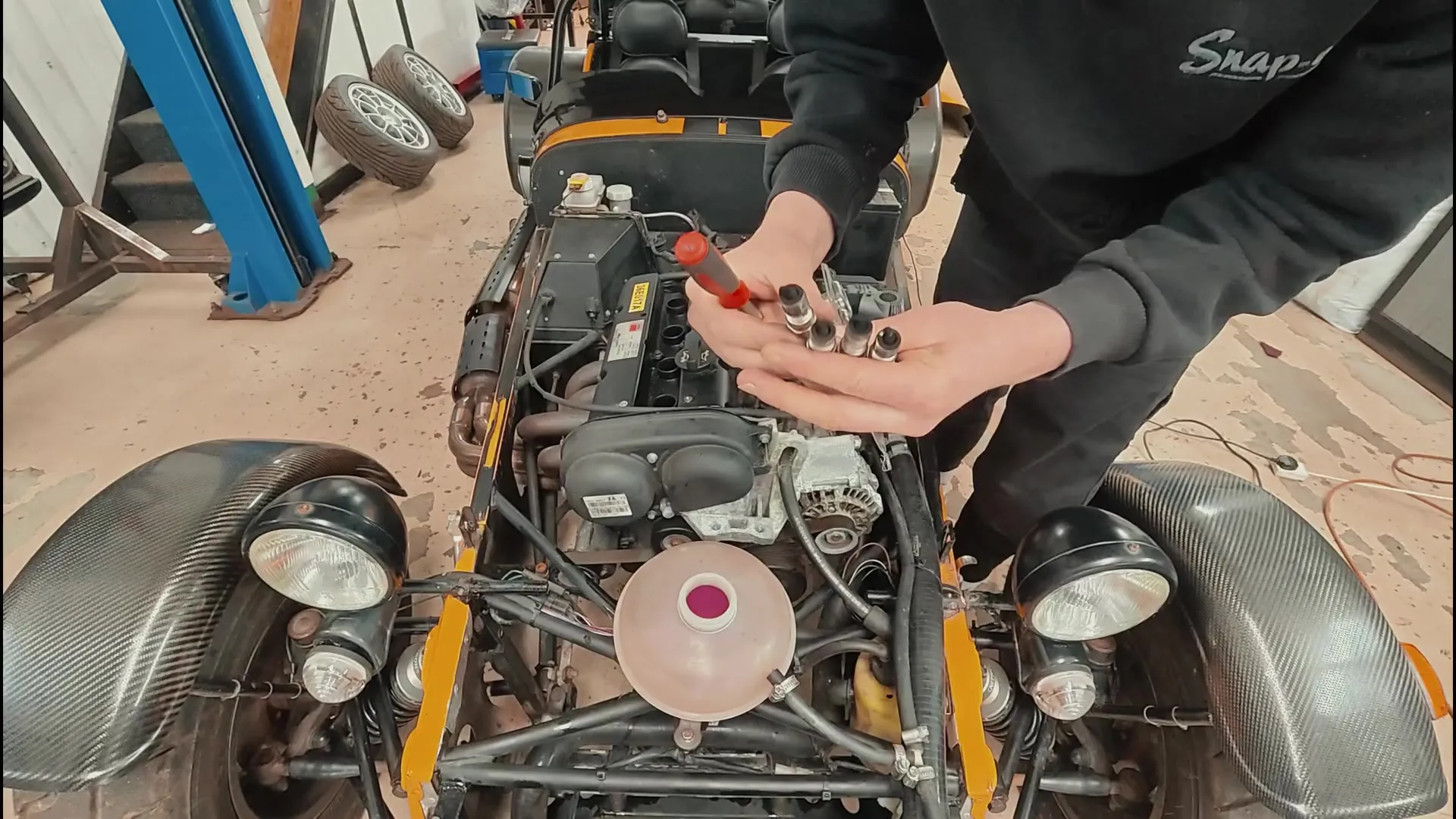
The plugs that came out told the story of how it had been running. They were old and fouled, well past their best, so a fresh set went in. With clean plugs, balanced bodies and a settled idle, the engine was a different thing.
Chasing A Cooling Fan That Would Not Switch On
With it up to temperature the coolant climbed to 92, then 94, then past 95 degrees, and the cooling fan never kicked in. That is too hot, and a fan that will not trigger is not something you let slide on a car that is going back on the road.
We worked it methodically, the cheap and easy checks first. The fan itself was good, it ran when we powered it directly. The fuses looked fine. We traced the circuit back to the fuse board to find the fan relay, bench tested it, and it switched correctly. So the fan worked, the relay worked, and the wiring to the fan worked. The fault was not in any of the obvious places. The answer was two separate things, and one of them was serious.
The Reveal: A Burnt Loom And A Missing Fan Switch
While we were in the fuse board we found a pin burnt badly enough to scorch the one next to it. That is never just cosmetic. We traced it out and the damage touched two circuits, the starter relay feed and the headlight circuit.
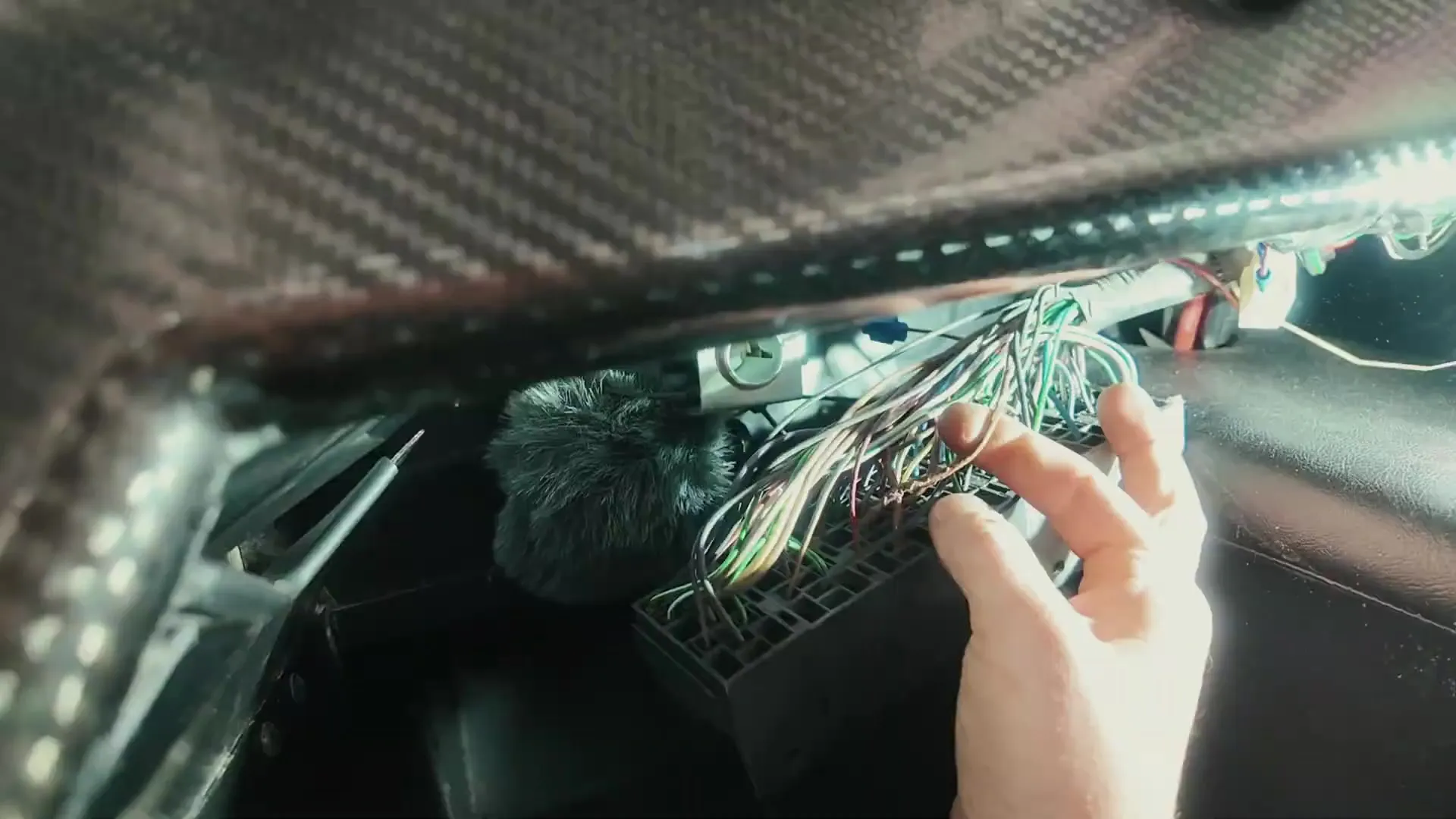
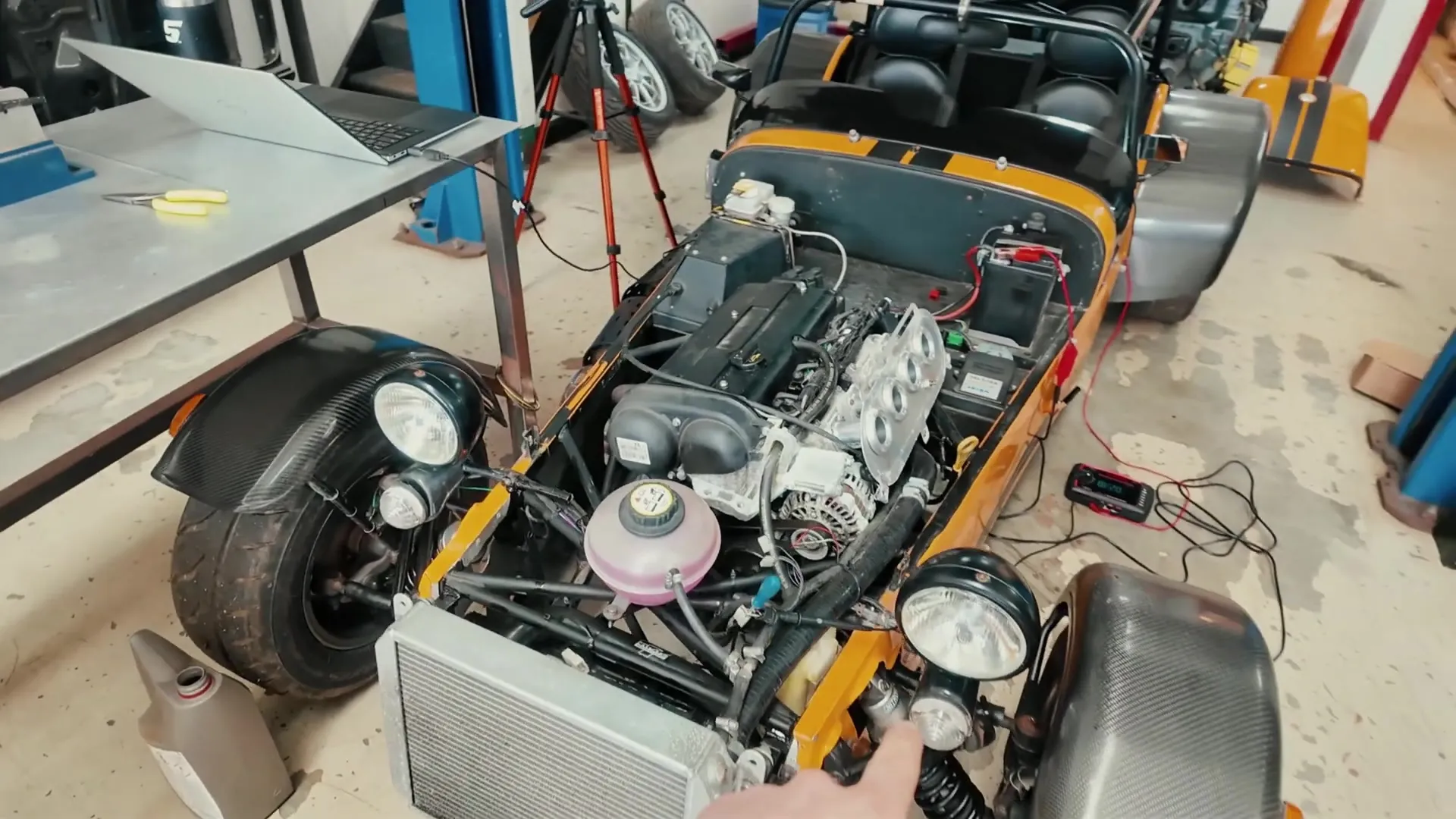
The headlight side is a known trap on an open car running H4 headlights. H4 bulbs pull a lot of current all the time, the connections sit out in the weather, and over the years water and corrosion drive the resistance up. Higher resistance means heat, and on this car the heat had cooked the wiring back from the lights all the way to the fuse board, rather than the fuse doing its job. Part of why is that someone had fitted a 20 amp fuse where it should be a 15. A fuse that is too big lets the extra load through and the wiring burns instead of the fuse blowing. That is exactly what had happened, and packed into a loom with other wires, alongside the starter feed, it was a fire waiting to start.
The fan had its own, separate problem. Tracing the trigger circuit, the wiring ran to where a fan switch should be, and there was no switch there. At some point in the past the radiator had been replaced, the fan switch was left out, and the port on the radiator had been capped over and forgotten. On a car that was barely driven you might get away with it. On a car going back on the road it meant the fan had nothing to tell it to come on, which is why the temperature was climbing with no help coming.
So two faults, found from one symptom. We isolated the burnt headlight circuit by pulling its fuses so the car was safe to work on, ordered a fan switch, and got on with making it right.
Watch part two, the repair
The Fix: A Proper Loom Repair
The right repair here is not a patch over burnt wire, it is to replace what is damaged with better than it had. We took the trumpets off the throttle bodies and a coolant hose out of the way for access, then stripped the front half of the loom back from the bulkhead all the way to the headlights, inspected every wire as we went, and confirmed the damage was the two cooked feeds and nothing more. The rest of the harness was sound.
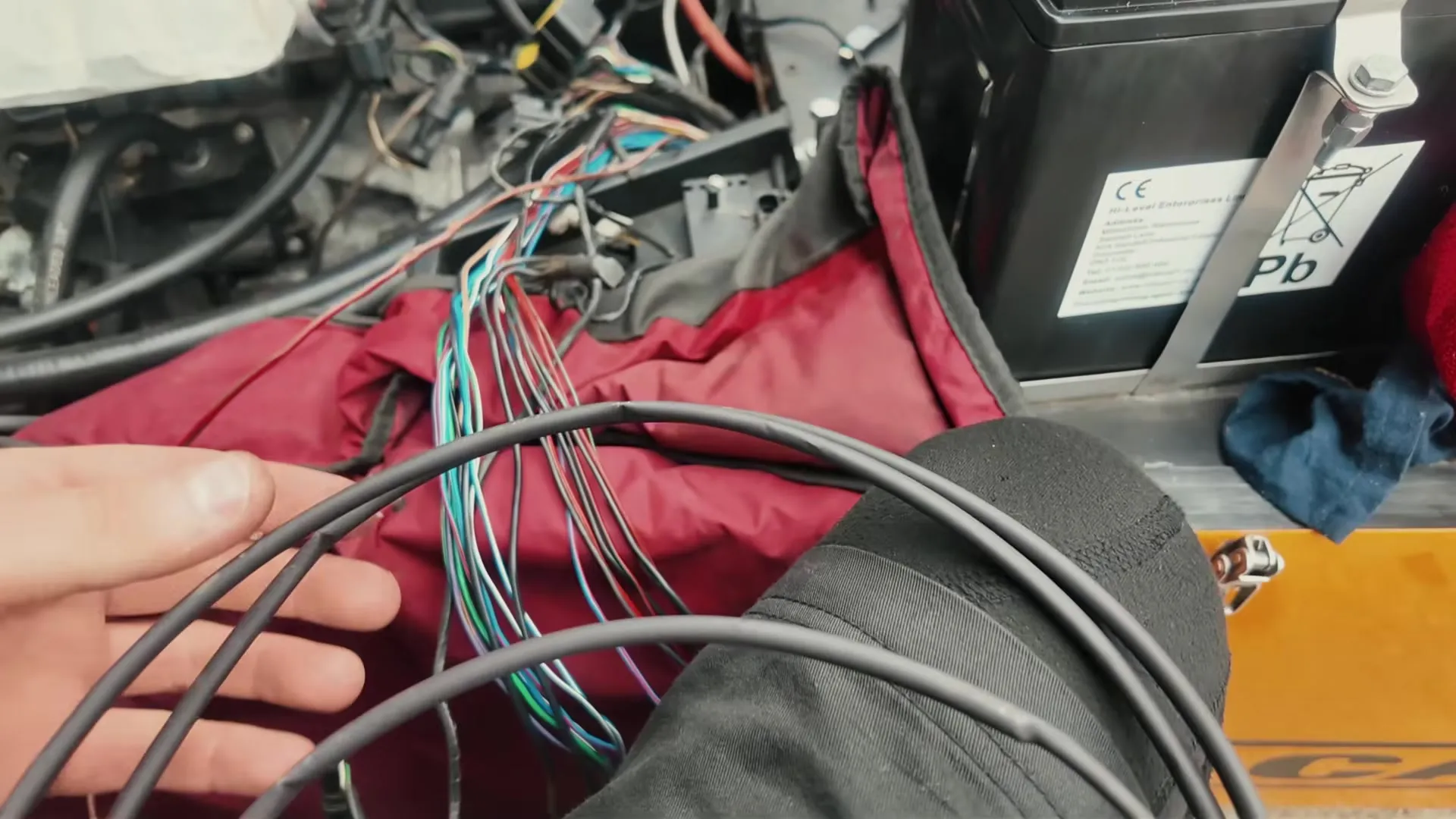
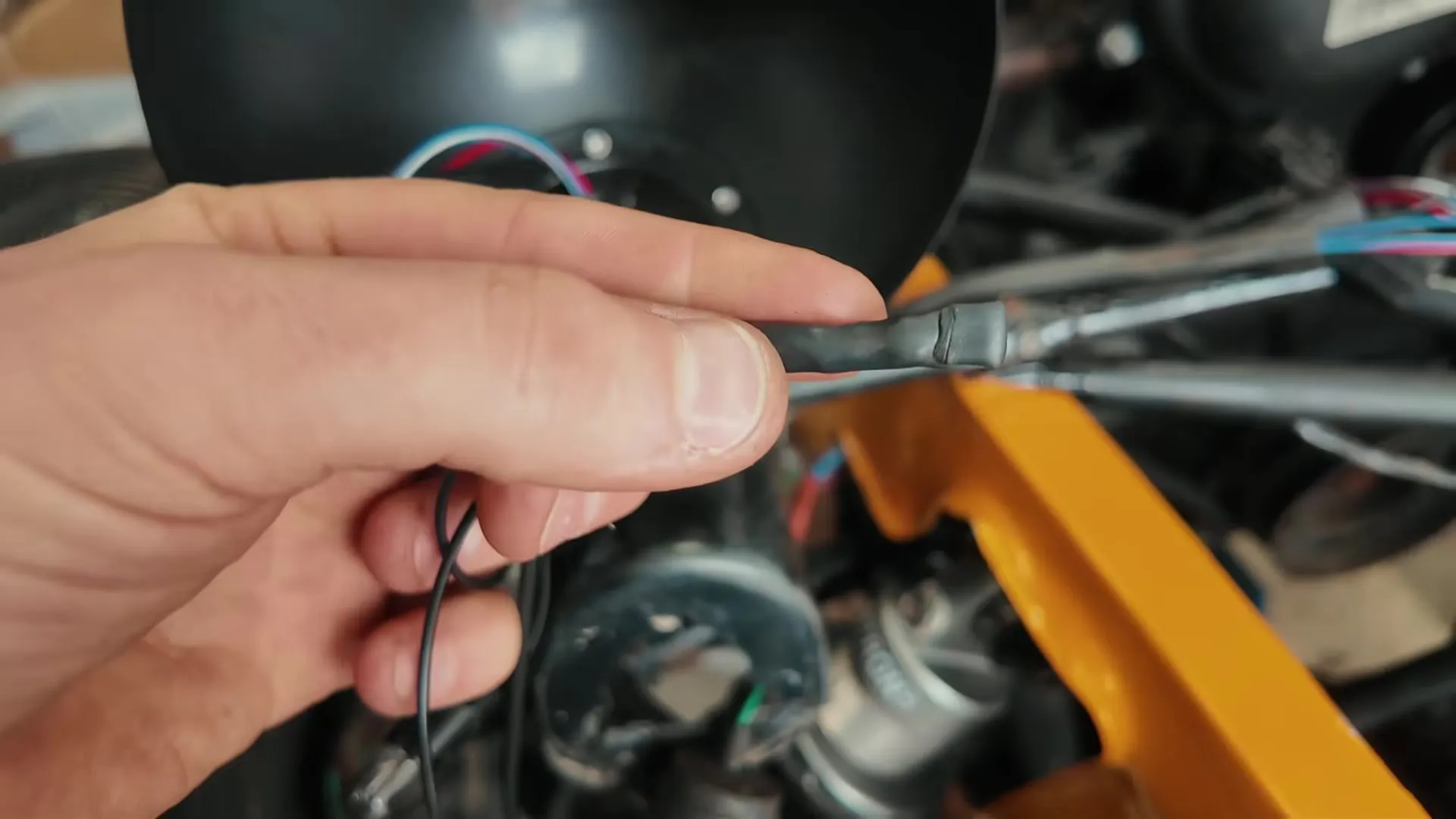
We made up a new section of loom in heavier gauge wire, heat sleeved it, and wrapped it back into the original harness so it looks and sits like it belongs. Both damaged wires, the starter and the headlight feed, were run fresh through the bulkhead. The relay box had cooked to the point its connections were loose, so we rebuilt it properly, replacing every pin, running a new larger gauge 12 volt feed and supply, and fitting a fresh plug on the radiator fan where the old connection had gone poor. And the oversized 20 amp fuse came out for the correct 15 amp it should always have had.
The real cause behind the heat was a poor earth, so we fixed that at the root. We took the headlights off, found the bad grounds and rusted connections behind them, and renewed the headlight wiring. We grouped the earths, barrel spliced and terminated them, and moved the front grounding point to a better spot on the chassis, running a larger cable to it so there is now a clean, visible, serviceable ground you can actually see and check. The front lights went back on and the indicators were rewired. To finish we cleaned up the alternator and starter terminals and the chassis ground under the body, then clipped, braided and tidied the whole loom so it is as neat as it is safe.
The Cooling System, Sorted At The Source
For the fan switch, the capped boss on the radiator had churned threads, so reusing it was not an option. We cleaned the old boss off, James welded a fresh boss onto the radiator, and a new fan switch and sensor went in. The radiator went back, the coolant pipes and the fan and sensor wiring were all reconnected and routed and secured neatly to the frame.
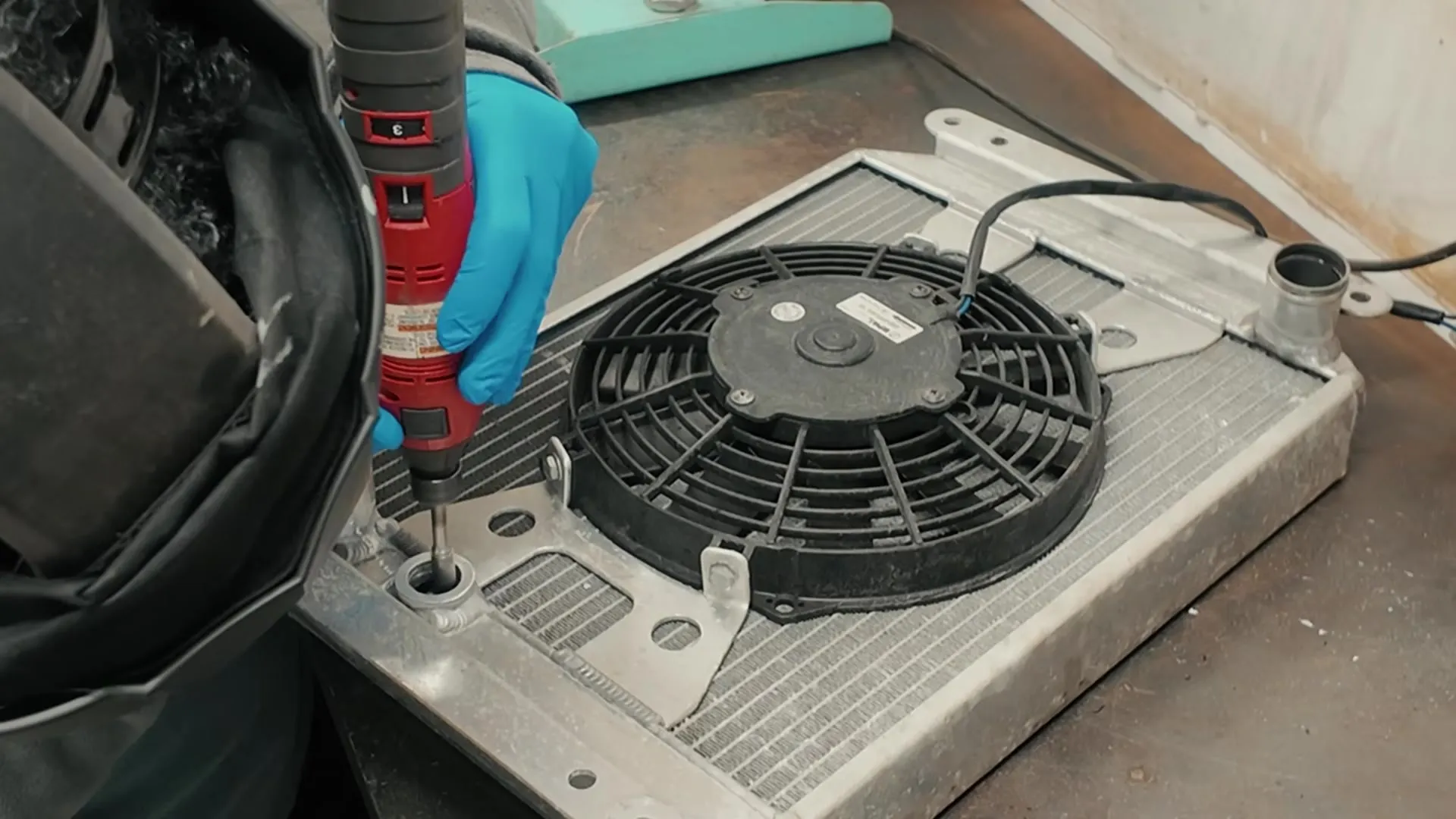
Then we filled and tested the cooling system, brought the engine up to temperature, and watched the fan trigger on its own at the right point. The thing that started the whole investigation now works exactly as it should.
The Rest Of The Service
Around the big jobs the car got the full service it came in for. Fresh race grade oil and a new filter, the new spark plugs from earlier, and the oxygen sensor taken out, cleaned up and refitted. With everything back together the cooling system was filled and bled, the engine heat cycled, the throttle body setup confirmed and double checked on a proper hot engine, and the car taken out for a light road test to check it over before it went home.
The Numbers
The Takeaway
Two faults came out of one job, and either could have ruined the car or worse. A fan that will not come on cooks an engine. A loom that runs hot behind the dash of an open car, fed through an oversized fuse, is how a Caterham ends up on the news for the wrong reasons. Neither was the owner's doing, both were left behind by work done in the past, and neither would have shown up without going through the car properly.
That is what a real service is. Not just oil and plugs, but eyes on the things that matter and the honesty to chase a symptom until you find the cause. If you have a Caterham or any focused car like it, especially one that has been sat or passed through a few hands, this is the kind of look it deserves before you trust it on the road.
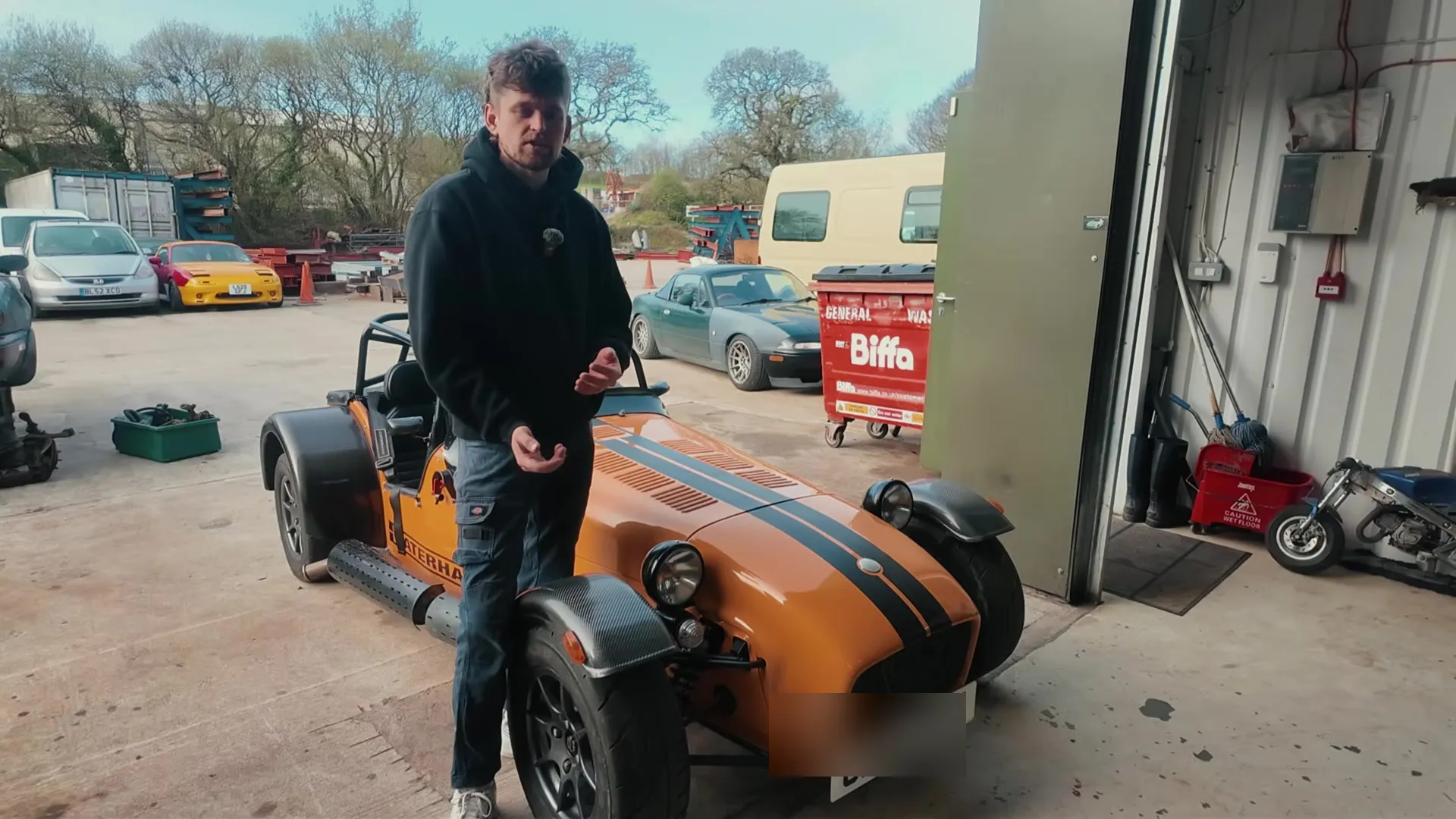
Watch both parts of the build on our YouTube channel.
Related
- Our servicing and motorsport preparation
- Our fabrication and wiring work
- An MX-5 brake upgrade we filmed
- More builds from the workshop